There is a space underneath your home that you probably never think about. It is dark, it is tight, and on a good day you forget it exists entirely. But your crawl space is doing something right now whether you know it or not — it is either staying dry and doing its job, or it is quietly filling with moisture that is rotting your floor joists, growing mold into your subfloor, and pushing damp air up into every room of your house.
If your floors feel soft or bouncy in certain spots, if there is a musty smell you cannot track down, or if you have noticed humidity inside your home that no amount of air conditioning seems to fix, the crawl space is the first place to look. And if you have already looked and found standing water, wet soil, or fuzzy white growth on the wood framing down there — you need professional crawl space water damage remediation, and you needo it soon.
Your crawl space is not sealed off from the rest of your home the way most people assume. Air moves upward through a process called the stack effect. Warm air inside your house rises and escapes through the attic and upper floors, which pulls replacement air in from the lowest point — your crawl space. Some studies suggest that up to fifty percent of the air on your first floor originally came from underneath the house.
That means whatever is in your crawl space air ends up in your living space. Mold spores, bacteria, moisture, and musty odors all ride that airflow straight up into your bedrooms, your kitchen, and your lungs. A wet crawl space is not just a structural issue. It is an indoor air quality issue that affects everyone in the home.
In Kensington, NY, crawl space moisture problems are common. Seasonal rain, shifting water tables, and soil conditions that hold moisture against foundations create a constant supply of water vapor rising from the ground. Older homes in Kensington, NY often have bare dirt floors in their crawl spaces with no vapor barrier at all, which means the earth is essentially exhaling moisture into the underside of the house around the clock.
Crawl space water damage remediation is not a single fix. It is a sequence of steps that has to happen in the right order, or the problem comes back.
We start by assessing the source of the water. Is it groundwater seeping through the foundation walls? Surface water from poor exterior grading or downspout drainage? A plumbing leak from a supply line or drain pipe running through the space? A condensation problem caused by humid outside air hitting cool surfaces? Each source requires a different solution, and we identify the source before we touch anything.
Once we know where the water is coming from, we extract any standing water using submersible pumps designed for low-clearance spaces. Crawl spaces are tight — sometimes only eighteen inches of vertical clearance — and standard extraction equipment does not fit. Our crews use specialized low-profile pumps and weighted extraction tools built for these confined environments.
After extraction, we set up drying equipment. This typically means commercial dehumidifiers placed at access points with ducting that pushes dry air into the crawl space, combined with air movers positioned to circulate air across the wet surfaces of floor joists, subfloor sheathing, and sill plates. We monitor moisture content in the wood daily using pin-type meters until the framing returns to an acceptable equilibrium moisture content — typically below fifteen percent for structural lumber in Kensington, NY.
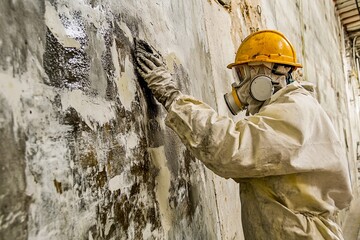
If mold has already colonized surfaces, we treat it before sealing anything up. Our crews apply antimicrobial solutions to affected wood, remove any insulation that has absorbed contaminated moisture, and use HEPA-filtered air scrubbers to capture airborne spores during the remediation process.
The final step is preventing the problem from returning. That usually involves installing a heavy-duty polyethylene vapor barrier across the crawl space floor and up the foundation walls, sealing vents that let humid outside air in, and in many cases placing a dedicated crawl space dehumidifier to maintain humidity below sixty percent permanently. In Kensington, NY, where seasonal moisture swings can be dramatic, that dehumidifier is often the difference between a one-time fix and a recurring headache.
Some crawl space moisture problems develop gradually over months or years. Others hit fast — a heavy storm overwhelms your foundation drainage and suddenly there is six inches of water under the house, or a pipe joint fails in the middle of the night and floods the space before anyone notices.
If you are dealing with standing water in your crawl space right now, here is what to do. Do not enter the space if the water is deep enough to touch any electrical wiring. Call us at (833) 541-0100 and describe what you see. If you can safely access your main water shutoff and you suspect a plumbing failure, shut it off. Then let us get there with the right equipment.
Sitting water in a crawl space is not something that will just evaporate on its own in Kensington, NY. The confined, poorly ventilated environment traps moisture. Without active extraction and drying, that water will soak into every piece of wood it contacts and mold will follow within forty-eight hours or less.
Got soft spots in your floors or a musty smell you cannot find? Call (833) 541-0100. We will inspect your crawl space, show you what we find, and explain exactly what it takes to fix it — no pressure, no mystery.
That soft spot in the hallway floor. That smell in the guest bedroom you keep blaming on the dog. That humidity that never quite goes away no matter what you set the thermostat to. Those are all your crawl space telling you something is wrong underneath.
Call (833) 541-0100 today. We will get under your Kensington, NY home, find out what is going on, and give you a straight answer about what needs to happen next. The longer moisture sits down there, the more it costs to fix. Let us stop the damage now.
"I had no idea my crawl space was as bad as it was until I noticed the laminate flooring in my hallway starting to buckle. Turned out there had been standing water under the house from a gutter drainage issue that had been going on for months. The remediation crew pumped it out."
"We bought our home in Kensington, NY last year and the inspection flagged moisture in the crawl space but said it was minor. It was not minor. By the time we moved in, there was visible mold on the subfloor and the whole house smelled like a wet basement. The remediation team came in, removed the old fiberglass insulation that was soaking wet and falling down, treated every surface, dried the space."
"These guys found the leak in my property, coordinated the plumber repair, did full drying and mold remediation, and installed a moisture barrier. They sent me daily reports with moisture numbers. That kind of documentation makes my job as a property manager so much easier."
Kensington is a village in Nassau County, on the North Shore of Long Island, in New York, United States. The population was 1,161 at the 2010 census.
Zip Codes in Kensington, NY that we also serve: 11021 11023 11026